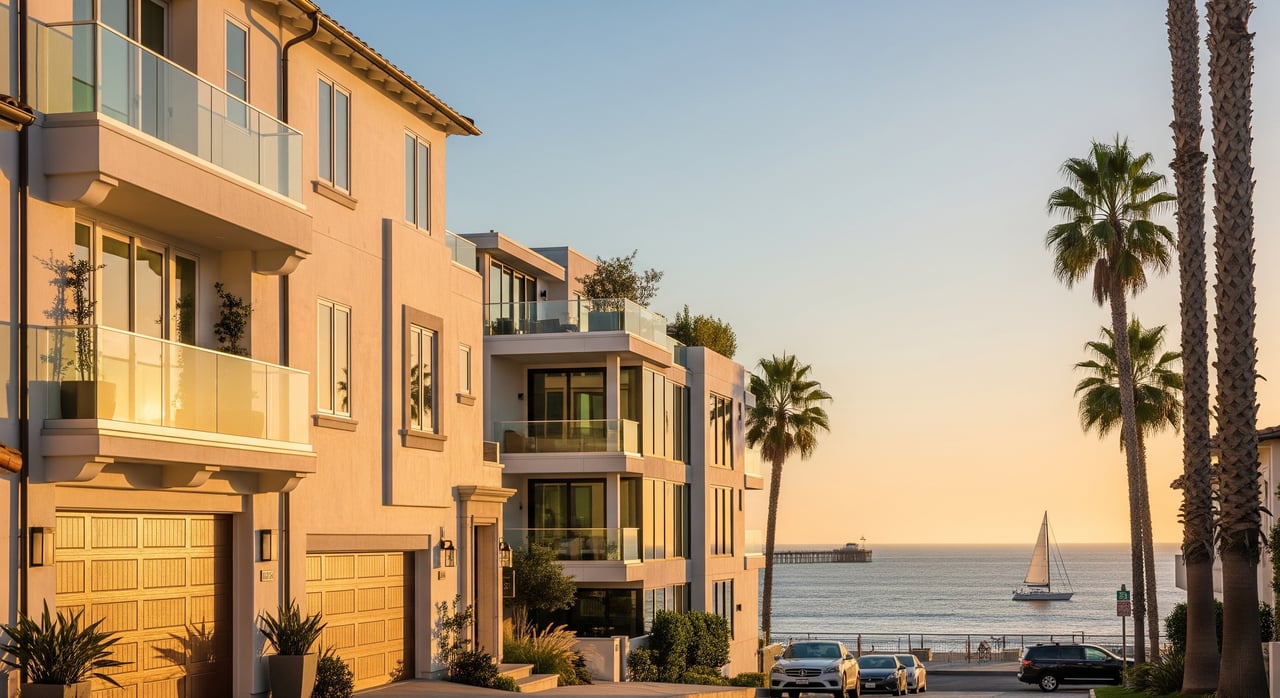
Thinking about a condo or a townhome in Redondo Beach, but not sure which fits you best? You’re not alone. Each option comes with different rules, responsibilities, and day-to-day trade-offs that affect your monthly costs and lifestyle. In this guide, you’ll learn the key differences in ownership, HOA coverage and fees, parking and access, financing and insurance, and resale. You’ll also get a simple checklist to compare specific listings. Let’s dive in.
Key definitions in California
Before you compare properties, it helps to know how California defines each option. A condominium means you own the inside of your unit and share ownership of common areas with other owners. The HOA manages the common-interest development under state law known as the Davis-Stirling Act.
A townhome is a building style, not a single legal category. In California, a townhome can be legally structured as a condo or as fee-simple ownership on its own lot with CC&Rs and an HOA. The legal form determines who handles the roof, exterior, and land, as well as how insurance works.
In Redondo Beach, you’ll see both structures. Many attached communities that look like townhomes are technically condos. Always confirm the legal form in the deed, preliminary title report, and HOA documents.
HOA, maintenance, and fees
What the HOA covers depends on the legal structure and the specific CC&Rs. In most condos, the HOA handles the exterior, roof, structural components, common areas, landscaping, a master insurance policy, and sometimes common utilities. Owners typically carry an HO-6 policy for interiors and personal property.
In fee-simple townhome communities, the HOA often covers shared streets, gates, and perimeter landscaping. You may be responsible for exterior paint, your roof, and your yard. Mixed or townhouse-style condo developments follow what’s spelled out in the CC&Rs and any maintenance matrix.
HOA dues vary widely across the coast. In beach-area Los Angeles County, monthly fees can range from a few hundred dollars to well over $1,000 depending on amenities, building age, elevators, on-site staffing, and insurance. Coastal salt air increases exterior upkeep, which can push costs higher. Remember, dues affect your monthly affordability and lender debt-to-income ratios.
Older or underfunded HOAs sometimes levy special assessments for deferred maintenance. California requires reserve studies and disclosures, but balances still vary by building. Pending litigation, construction defect claims, and low reserves can hurt both resale and financing.
Practical steps:
- Review CC&Rs, bylaws, rules, budgets, reserve studies, and the last 2–3 years of financials and meeting minutes.
- Ask about fee increases, special assessments, and how the HOA enforces exterior upkeep in the coastal environment.
- Confirm what the master insurance policy covers and what you must insure.
Parking and access
Parking shapes daily life in Redondo Beach. The city’s coastal density means assigned spaces, guest parking rules, and street permit zones all matter. Listings may offer deeded or assigned garage spaces, tandem or side-by-side parking, and guest parking with permits or time limits.
Check EV charging options and HOA rules for installing chargers. If storage is important, confirm any locker or overhead storage permission in the garage. Near entertainment and commercial areas, visitor demand can tighten street parking, especially on weekends and evenings.
What to verify
- Is parking deeded to the unit or just assigned by the HOA?
- Is your space tandem or side-by-side, and what are the garage clearance limits?
- How many guest spaces exist, and are permits required nearby?
- What are the rules on EV charging and storage in garages?
North vs South trade-offs
North Redondo often offers stronger walkability to restaurants, services, and transit corridors, which can bring higher foot traffic and tighter guest parking. Complexes here may be more condensed, with assigned garage parking highly valued.
South Redondo tends to show more residential pockets and some developments with larger layouts and integrated private garages. You may find more townhome-style communities and slightly more space. These are general tendencies, and a few blocks can change the trade-offs.
Financing and insurance
Financing can differ by project type. Condo communities must meet project eligibility for many loan programs. Lenders often review reserves, owner-occupancy mix, special assessments, and litigation. Investor concentration and delinquent dues can be deal-breakers for certain loans.
Fee-simple townhomes are often underwritten like single-family homes, which can simplify financing. Either way, your lender will include HOA dues in your monthly housing cost calculation, which affects how much you can borrow.
Insurance depends on responsibility. Condo owners usually carry an HO-6 policy for interior finishes and personal property, while the HOA holds a master policy for the building. Fee-simple townhome owners may need a full dwelling policy if they maintain the exterior and roof.
Coastal risk is another factor. Earthquake coverage is a separate policy in California and often recommended. Low-lying areas or properties within mapped flood zones may require flood insurance. Salt-air corrosion can raise maintenance and insurance exposures over time.
Taxes and assessments
Property taxes in Los Angeles County apply to condos and townhomes based on assessed value. Some newer communities may include Mello-Roos or other community facility district charges, which increase annual taxes. HOA special assessments are separate from property taxes and can add to monthly or one-time costs.
Confirm any parcel taxes, utility assessments, and how utilities are metered or allocated within the HOA. If common utilities are master-billed, note how costs are shared.
Resale and marketability
Resale dynamics vary by submarket. In many areas, condos can trade at lower prices and appreciate more slowly than detached homes. Townhomes often land in the middle. In coastal, walkable locations with limited inventory, strong demand can narrow typical gaps.
Project-level factors often matter most at resale. Healthy reserves, clear maintenance plans, adequate insurance, non-restrictive rental policies, deeded parking, and well-kept common areas all support buyer confidence. Litigation or chronic special assessments can weigh on price and days on market.
Short-term rental regulations affect investor demand and income potential. Many coastal cities and HOAs restrict short-term rentals. Confirm rules at both the city and HOA levels for every property you consider.
Quick comparison guide
Condos may suit you if:
- You prefer the HOA to handle exterior and common-area upkeep.
- You want amenities like pools, gyms, elevators, or staffed lobbies.
- You’re comfortable with higher dues in exchange for shared maintenance.
Townhomes may suit you if:
- You want more control over the exterior and roof in a fee-simple setup.
- You value direct garage access, storage, or a more residential feel.
- You want fewer project-eligibility hurdles with certain loans.
Either option can work well if the HOA is well managed and the location supports your daily routine.
Buyer due diligence checklist
Use this list to compare two Redondo Beach listings side by side:
- Legal structure: Confirm condo vs fee-simple in the deed and prelim report.
- HOA packet: CC&Rs, bylaws, rules, current budget, reserve study, insurance certificates, litigation disclosures, and 12–24 months of meeting minutes.
- Financial health: Last 2–3 years of financials, current reserve balance, history of special assessments, and known capital projects.
- Parking specifics: Deeded vs assigned, tandem vs side-by-side, guest parking policy, EV charging rules, and storage permissions.
- Maintenance history: Roof and exterior paint dates, elevator service, termite and moisture remediation, and any seismic upgrades.
- Rental policies: Rental caps and short-term rental restrictions at both HOA and city levels.
- Insurance needs: Master policy type and deductible, your required coverage, and any earthquake or flood requirements.
- Utility setup: Separate meters vs master-billed utilities and how costs are allocated.
- Lender eligibility: Ask your lender to pre-check the project for your loan type.
- Neighborhood context: Walkability, noise exposure near entertainment corridors, and local parking rules.
Make your choice
When comparing two specific homes, focus on your true cost of ownership and daily convenience. Model your monthly payment with HOA dues, property taxes, insurance, and any special assessments. Ask your lender early about project eligibility if you’re considering a condo.
Next, weigh parking and access. Deeded, side-by-side garage parking with EV options can be a major quality-of-life boost. Finally, consider resale. A healthy HOA with clear reserves, stable dues, and clean maintenance history supports liquidity when you decide to move.
If you want a calm, local walkthrough of the options, reach out to Gayle Probst for a complimentary consultation. You’ll get practical guidance on trade-offs, a customized checklist for your short list, and access to trusted local resources.
FAQs
What is the legal difference between condos and townhomes in California?
- In California, condos are a form of ownership in a common-interest development, while townhomes are a building style that can be structured as a condo or as fee-simple with an HOA, which determines maintenance and insurance responsibilities.
How do HOA fees typically compare in Redondo Beach?
- Fees vary widely, from a few hundred dollars to well over $1,000 per month in beach-area communities, driven by amenities, building age, insurance costs, and reserve needs.
What parking issues should I check near the coast?
- Confirm deeded vs assigned spaces, tandem vs side-by-side parking, guest parking limits, street permit zones, and EV charging options or installation rules.
How does financing differ for condos vs townhomes?
- Condo projects must meet lender project-eligibility standards, while many fee-simple townhomes are underwritten like single-family homes, which can simplify the loan process.
Do Redondo Beach HOAs allow short-term rentals?
- Many HOAs and coastal cities restrict short-term rentals, so you should confirm both city regulations and the specific HOA’s rental rules before you buy.
What insurance will I need for a coastal property?
- Condo owners typically carry HO-6 interior coverage, while fee-simple townhome owners may need full dwelling coverage, and both should consider separate earthquake and, if applicable, flood policies.