Imagine stepping out your back gate, swinging into the saddle, and joining a nearly 30‑mile network of bridle trails that wind through a quiet, gated city above the coast. If you are exploring horse-friendly living on the Palos Verdes Peninsula, Rolling Hills offers a rare blend of privacy, open land, and real equestrian infrastructure. In this guide, you will learn how the trails work, what zoning allows on most lots, where to board or train nearby, and what daily life looks like with horses here. Let’s dive in.
Community equestrian infrastructure
Bridle trails and riding rings
Rolling Hills maintains nearly 30 miles of recognized bridle trails within the RHCA community, plus two community riding rings: the Caballeros Ring at Hesse’s Gap and the Clif Hix Ring. Trails are designed for equestrians. Pedestrians are allowed with a resident escort, and bicycles or motor vehicles are not permitted on bridle trails. You can review trail etiquette and the community layout on the RHCA’s bridle trails page for current guidance and maps (RHCA bridle trails).
Access, badges and etiquette
If you are not a resident, you must obtain an RHCA trail badge and check in with gate personnel before riding inside the community. The Palos Verdes Peninsula Horsemen’s Association outlines the trail badge process and offers rider resources for visitors and locals alike (PVPHA trail badge info). Expect daylight riding rules, a no‑smoking policy on trails, and ring access limited to residents. The RHCA also enforces guest and vehicle procedures at the gates, which helps keep the network safe and quiet for horses.
What zoning allows on most lots
Lot size and coverage basics
Rolling Hills is primarily zoned RA‑S to preserve its rural and equestrian character. Minimum net lot sizes are about 1 acre in RA‑S‑1 and 2 acres in RA‑S‑2, with development reviews commonly applying roughly 20% maximum coverage by structures and about 35% coverage by impervious surfaces. Setback and side yard rules also address where stables, corrals, and turnouts can be located. You can scan the RA‑S district framework to understand how these standards shape each property (zoning overview).
Stable and corral requirements
When a lot is developed, the city requires a set‑aside for future equestrian use. The typical minimum is about 1,000 square feet, often shown as 450 square feet for a stable and 550 square feet for a corral. All stables must be at least 200 square feet, and corrals at least 550 square feet, with many configurations beyond the smallest sizes triggering additional permits and reviews. Materials, setbacks, tack room limits, and sanitation standards are clearly defined in the stable chapter of the code (stable and corral rules).
Access, manure and maintenance
City rules require a practical access route for feed delivery and waste removal, typically a roughened, non‑fully‑paved pathway of around six feet in width. Stables and related areas must be maintained in sanitary condition. Animal waste cannot be allowed to accumulate or run off and must be composted or removed in an approved manner. These standards influence barn placement, driveway design, drainage, and how you plan daily chores on your lot (stable and corral rules).
Typical on‑site features buyers see
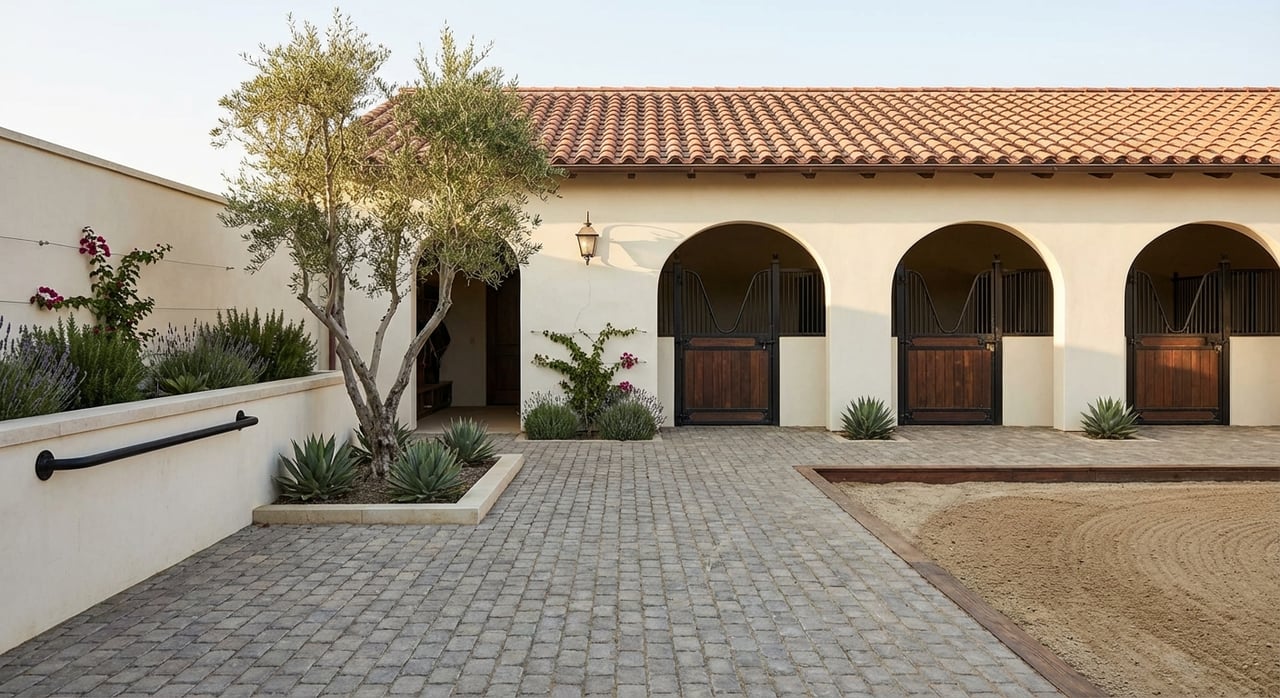
Many Rolling Hills properties run from one to several acres and include multi‑stall barns, tack rooms, pipe or box corrals, paddocks or turnouts, and sometimes small private arenas. It is also common to see lots with direct trail connections or “street‑to‑street” configurations that make feed delivery and trailer access easier. Larger parcels may add walkers or more extensive turnout options. Exact layouts vary by property and permitting history, so you will want to confirm what exists on site and how it was approved.
If you board or take lessons nearby
Local boarding and training options
If you are not ready to keep horses at home, the Peninsula offers several nearby boarding and training centers. Palos Verdes Stables in Palos Verdes Estates provides lessons, camps, boarding, and guided trail rides, which can be a great way to meet the local community (Palos Verdes Stables). Other established options include the Peter Weber Equestrian Center and additional private or club facilities across the Peninsula. Availability and programs change frequently, so confirm services and waitlists directly with each barn.
Typical costs and how to compare
Boarding prices in the Los Angeles area vary widely by facility and level of care. An LA‑area aggregator reports a 2024 average near 1,100 dollars per month for boarding, with simple pasture options often in the lower range and full care at high‑service facilities trending higher (LA boarding cost overview). Some Southern California barns list around 600 dollars for a 12' x 12' box stall as a reference point, while training or show programs can push total monthly costs well above 1,000 dollars depending on services (example rate listing). Always ask for current pricing, included services, and any additional charges for feed, shavings, blanketing, and turnout.
What to ask when contacting a barn
- Care level and inclusions: full care, partial care, or pasture, and what each includes.
- Feed, shavings, and turnout schedules.
- Vet and farrier policies, scheduling, and emergency contacts.
- Fire safety and evacuation planning for horses.
- Trailer parking and guest rider policies.
- Trainer access and any required releases or insurance. You can find rider resources and local contacts through the Peninsula’s horsemen’s association (PVPHA resources).
Daily care, safety and logistics
A day in the life with horses
Expect a simple routine that repeats morning and evening. Mornings typically include feeding, water checks, stall picking or paddock cleanup, and turnout or arena work. Evenings often bring a second feeding, blanketing if needed, and fence and water checks. Farrier visits usually run on a six to eight week cycle, and routine shots and health checks are part of standard equine care.
Gates, guests and service access
Rolling Hills is a gated city, so you will coordinate with RHCA gatehouses for day‑to‑day needs. Plan for guest lists, ID checks, and check‑ins when hosting non‑resident riders, farriers, vets, or showings. Service providers and trailers may have specific visiting hours or staging instructions, so build gate logistics into your scheduling. You can review general visiting procedures before appointments (RHCA visiting hours).
Wildfire and evacuation planning
Wildfire is a recurring regional risk, and planning for horses is essential. The City’s Equine Preparedness guide recommends ID and microchipping, maintaining at least three days of feed and water, practicing trailer loading, and preparing alternative stabling contacts and evacuation routes. Keep an updated list of haulers, barns, and neighbors who can assist, and review current hazard maps to understand insurance and defensible‑space requirements. Start with the city’s published guidance and updates (Equine Preparedness; City hazard updates).
Water and drought considerations
The Peninsula is served by California Water Service, which offers guidance on conservation and publishes local water quality and system information. Arena watering, wash racks, and daily horse care can use a significant amount of water, so it is smart to review any current restrictions and plan for efficient use. Check the latest local reports and conservation programs to keep your setup compliant and sustainable (Cal Water Peninsula info).
Buyer checklist for equestrian homes in Rolling Hills
Use this quick list to evaluate properties and plan next steps:
- Zoning and permits: Confirm whether the property is RA‑S‑1 or RA‑S‑2 and review approvals for existing stables, corrals, and arenas. Check if the required set‑aside areas were documented on past plans (zoning overview).
- Stable construction and safety: Verify electrical in barns, hay storage placement, and clear aisleways and exits that support fast evacuation. Compare with the City’s equine preparedness guidance for best practices (Equine Preparedness).
- Access and waste: Look for the required roughened access path for feed and manure removal. Ask how manure is removed or composted and inspect drainage to prevent runoff (stable and corral rules).
- Trail and community access: Note any private easements or direct trail connections. Understand the nearest RHCA trail access points and the current badge and gate procedures for guests or lesson students (RHCA bridle trails).
- Utilities and water: Confirm Cal Water as the supplier and check for any current watering rules that could affect arenas and wash racks (Cal Water Peninsula info).
- Boarding and training: If you plan to board, call nearby stables to ask about waitlists, fees, care levels, and trainer availability. Programs and pricing change quickly, so verify details directly.
- Insurance and hazards: Check whether the property lies in an updated Fire Hazard Severity Zone and how that may affect premiums and defensible‑space requirements (City hazard updates).
Ready to explore Rolling Hills equestrian homes?
If you want the privacy and open space of Rolling Hills paired with real riding access, thoughtful planning makes all the difference. From trail badges and gate logistics to zoning and barn layout, there are many details that shape your daily life with horses. When you are ready to tour properties or discuss how equestrian features affect value, reach out to Gayle Probst for local guidance and a tailored plan.
FAQs
Do non‑residents need anything to ride Rolling Hills trails?
- Yes. Non‑resident riders need an RHCA trail badge and must check in at the gates before entering the bridle trail network.
What are the minimum sizes for a stable and corral on a lot?
- The city requires at least 200 square feet for a stable and 550 square feet for a corral, with a typical 1,000 square foot set‑aside when lots are developed.
Are bikes or motorized vehicles allowed on the bridle trails?
- No. Bridle trails are for equestrians, pedestrians may enter with a resident escort, and bicycles or motor vehicles are not permitted.
How much does horse boarding cost near Los Angeles?
- Costs vary widely. A recent LA average is near 1,100 dollars per month, with simple pasture options lower and full care or training packages often higher.
Can I bring my trainer, vet, or farrier into Rolling Hills?
- Yes, but plan ahead. You will add them to your guest list, follow RHCA gate procedures, and observe any visiting hours or trailer staging rules.
How should I prepare horses for wildfire evacuation in Rolling Hills?
- Use the City’s Equine Preparedness guidance: ID and microchip, keep three days of feed and water on hand, practice trailer loading, and line up alternative stabling and routes in advance.